Table of Contents

The path to obtaining a Qatar GP healthcare license has become increasingly streamlined, yet many healthcare professionals still find themselves confused by the multi-stage process.
At the heart of this journey lies the GP QCHP exam — a mandatory assessment for most healthcare practitioners seeking to practice in Qatar.
Whether you are a physician, nurse, pharmacist, dentist, or allied health professional, understanding how DataFlow Qatar verification connects to eligibility, and ultimately to Prometric scheduling, is essential for a smooth licensing experience.
The GP QCHP exam represents more than just a test; it is a critical milestone in your professional journey. Administered by the Department of Healthcare Professions (DHP) under Qatar’s Ministry of Public Health, the GP QCHP exam ensures that healthcare practitioners meet the competency standards required to deliver safe, effective patient care.
This comprehensive guide walks you through every stage — from initiating Dataflow Qatar primary source verification to scheduling and passing your GP QCHP exam, and finally securing your Qatar healthcare license.
This anchor post serves as your central resource for navigating Qatar’s healthcare licensing system in 2026. By the end, you will have a clear understanding of timelines, documentation requirements, fee structures, and practical strategies to avoid common pitfalls that delay licensing.
Understanding the Qatar Healthcare Regulatory Framework
From QCHP to DHP: What Changed and What Stayed the Same
The Qatar Council for Healthcare Practitioners (QCHP) has been restructured under the Department of Healthcare Professions (DHP) within the Ministry of Public Health. However, the term “QCHP” remains widely used in search queries, documentation, and professional conversations. When you encounter references to the GP QCHP exam or QCHP registration, they refer to the same regulatory authority now operating as DHP-MOPH .
The DHP functions through three interconnected sections: Registration and Licensing, Fitness to Practice, and Accreditation. Together, these sections ensure that all healthcare practitioners — physicians, dentists, nurses, pharmacists, and allied health professionals — meet Qatar’s rigorous standards before receiving authorization to practice .
Why the QCHP Exam Matters for Your Qatar Healthcare License
The QCHP exam is not merely a formality; it is a legislated requirement under the Qualifying Examination Policy. All healthcare practitioners in 16 core categories must sit for this examination during the evaluation stage, unless they qualify for specific exemptions . The QCHP exam assesses your ability to apply knowledge, concepts, and principles fundamental to safe patient care in Qatar’s healthcare environment.
For many professionals, passing the QCHP exam is the final major hurdle before license issuance. It validates that your clinical knowledge meets Qatar’s standards, regardless of where you obtained your original qualification.
Stage 1: DataFlow Qatar Primary Source Verification
What Is DataFlow Qatar and Why Is It Mandatory?
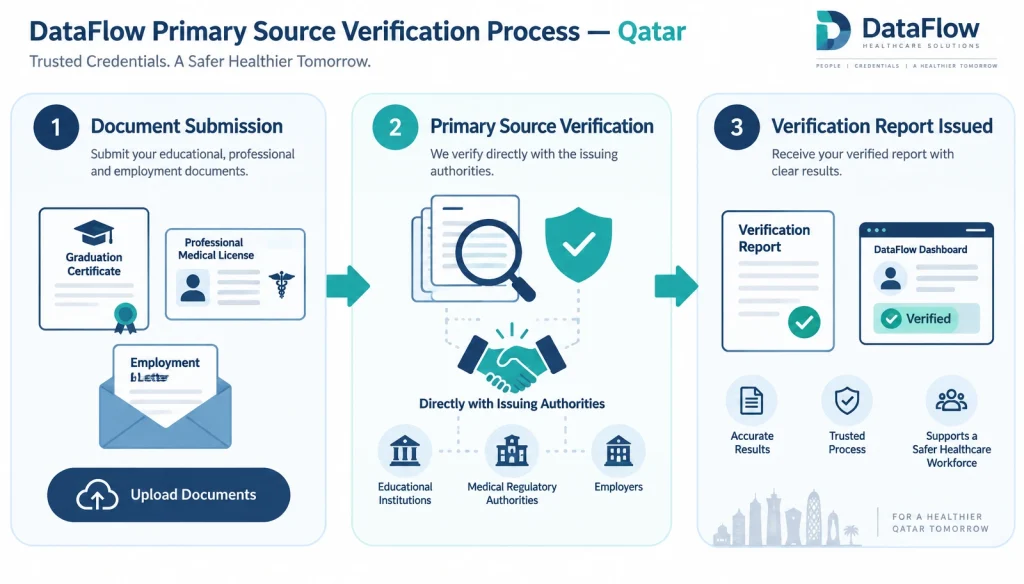
DataFlow Qatar refers to the Primary Source Verification (PSV) service provided by DataFlow Group in partnership with the DHP-MOPH. Since 2009, DataFlow has served as the trusted verification partner for Qatar’s healthcare regulatory authority . The purpose of DataFlow Qatar is straightforward yet critical: to confirm that your credentials — educational qualifications, professional licenses, and work experience — are genuine and authentic.
The DataFlow Qatar process is mandatory for all new applicants. Even if you already hold a DataFlow report from another Gulf authority (such as DHA, DOH, or SCFHS), you must transfer your report to QCHP/DHP. This ensures that your verification aligns with Qatar’s specific requirements .
Documents Required for DataFlow Qatar Verification
The documentation requirements vary by professional category. For physicians and dentists, DataFlow Qatar typically verifies:
- Two educational degrees (primary medical/dental degree and highest postgraduate qualification)
- One professional license from your current or most recent place of work
- Work experience covering the last five years (up to three employers)
- Cross-check verification
For allied health professionals, nurses, and pharmacists, the verification scope may include one educational degree and three years of experience, depending on your specific category .
Essential documents you will need to submit include:
- Clear scanned copies of your passport
- Educational certificates (degrees/diplomas)
- Employment letters
- Health license certificates
- Certificate of Good Standing from your licensing authority
DataFlow Qatar Fees and Processing Timeline
As of 2026, the DataFlow Qatar fees are structured by professional category. Physicians and dentists can expect to pay approximately QAR 1,210 for Package A, which covers verification of two educational qualifications, one professional license, and five years of experience . Allied health practitioners and nurses fall under packages ranging from QAR 990 to QAR 1,210 depending on their specific scope .
The standard processing time for DataFlow Qatar verification averages 20 working days from the date all documents and information are submitted. However, this timeline can extend significantly if issuing institutions are slow to respond to verification requests. Starting your DataFlow Qatar application early is the single most effective way to avoid delays in your overall licensing journey .
For those requiring faster processing, DataFlow offers an Express Service that completes verification within 14 working days for an additional fee of QAR 492 .
Transferring an Existing DataFlow Report to Qatar
If you already possess a DataFlow report from another Gulf health authority, you can request a report transfer to DHP-MOPH. This process typically takes five days if no additional documents are required. The transfer fee is QAR 200, plus costs for any additional verifications needed to meet Qatar’s requirements . To initiate a transfer, you must submit your old DataFlow report along with any supplementary documents through the designated DataFlow transfer portal.
Read Our
Complete Dataflow Guide
Stage 2: QCHP Eligibility and Registration
Submitting Your DHP Application
Once your DataFlow Qatar verification is complete — or in some cases, while it is still in progress — you proceed to submit your application through the DHP registration/licensing electronic system. This application marks your formal entry into the Qatar healthcare license process .
Your application package must include:
- Copy of valid passport
- Copy of Qatar ID (QID) or national ID where applicable
- Recent photograph meeting DHP photo criteria
- Updated CV following DHP format
- Copies of all academic certificates with official transcripts
- Experience certificates covering the required years for your scope
- Copy of valid medical license from your country of origin
- Copy of your DataFlow verification report
- Medical report (valid for 6 months) including HIV, HCV, HBV tests and chest X-ray results
- Copy of valid CPR certification (unless exempted)
- Police Clearance Certificate from Qatar Ministry of Interior
Work Experience Requirements for Qatar Healthcare License
Work experience requirements differ based on your qualification origin and professional category. For graduates from universities outside Qatar:
- General Practitioners and General Dentists: One year internship plus one year of work experience is required for most categories. Qataris and specific family residency categories have modified requirements .
- Pharmacy, Nursing, and Allied Health: One year of work experience is required for offspring of residents and spouses of residents. Qatari nationals and offspring of Qatari women are exempt from this requirement .
For nursing practitioners specifically, the required year of experience must be in direct clinical nursing within a recognized healthcare facility, obtained after receiving official DHP approval .
Evaluation and Approval Timeline
The DHP registration department reviews applications within 10 working days from the date all requirements are completed. Applications that do not meet requirements are returned to the applicant for completion. It is the applicant’s responsibility to follow up on the receipt of any required documents, including the Certificate of Good Standing, which must be sent directly from your licensing authority to the DHP Registration Section .
Upon approval, you will receive your eligibility confirmation, which authorizes you to proceed to Prometric examination scheduling.
Stage 3: The QCHP Exam — Format, Content, and Preparation
Which Healthcare Practitioners Must Take the QCHP Exam?
The Qualifying Examination Policy mandates that all healthcare practitioners in the following scopes must sit for the QCHP exam at the evaluation stage :
- General Practitioners
- General Dentists
- Pharmacists
- Registered General Nurses
- Registered Midwives
- Laboratory Technologists and Technicians
- Radiology Technologists and Technicians
- Physiotherapists
- Paramedics (Basic, Paramedic, Critical Care)
- Dental Assistants, Hygienists, and Lab Technicians
- Dieticians
Specialty physicians and dentists have their own examination blueprints with higher cut scores .
QCHP Exam Format and Cut Scores
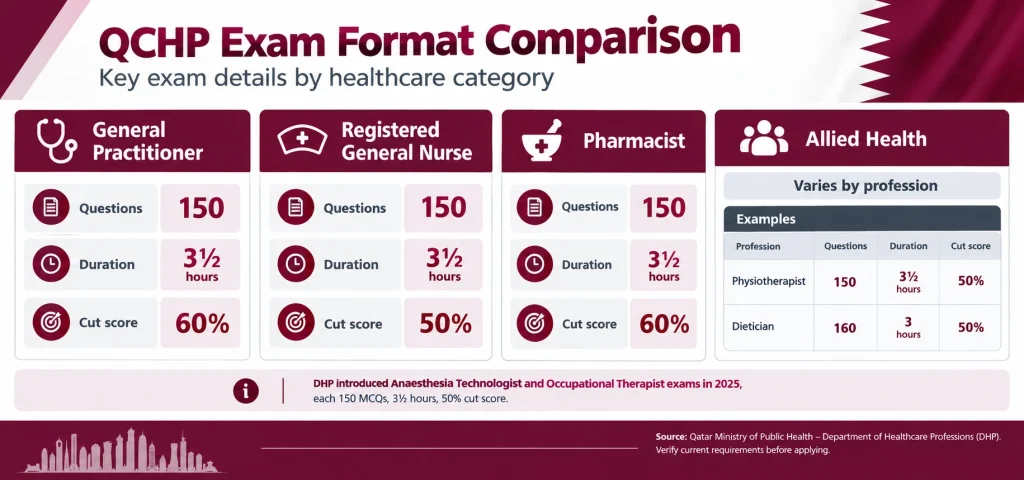
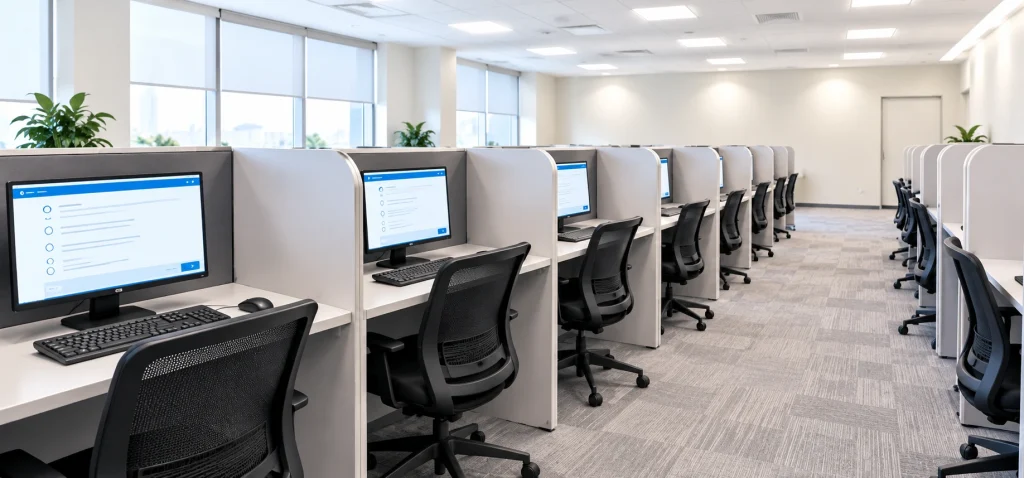
The QCHP exam is delivered as a computer-based test through Prometric at centres worldwide. The standard format for most categories is 150 multiple-choice questions completed within 3 hours .
Cut scores vary by profession:
- General Practitioners, General Dentists, Pharmacists: 60% (90 out of 150 correct)
- Registered General Nurses, Midwives, and most Allied Health: 50%
- Specialty Physicians and Dentists: 65% for most specialties
The Dietician exam is unique, consisting of 160 MCQs with a duration of 3 hours and 10 minutes, and a 50% cut score .
Subject Blueprint for General Practitioners
For physicians preparing for the QCHP exam, the General Practitioner blueprint covers four core clinical domains:
- Internal Medicine: 35–40% (cardiology, respiratory, gastroenterology, nephrology, endocrinology, haematology, neurology)
- Surgery: 20–25% (general surgery, trauma, vascular, orthopaedics, post-operative management)
- Pediatrics: Approximately 15–20% (neonatology, child development, vaccination, paediatric emergencies)
- Obstetrics & Gynaecology: 15–20% (antenatal care, labour, high-risk pregnancy, gynaecological conditions)
Exemptions from the QCHP Exam
Certain practitioners may qualify for exemption from the QCHP exam:
- All Qatari practitioners
- Dentists with postgraduate degrees of minimum two years’ duration including accredited practical hours
- Pharmacists, Nurses, and Allied Health Practitioners with clinical Masters or PhD degrees in their relevant field
- Practitioners holding valid equivalent exams such as USMLE Step 3, PLAB Part 1, or Australian Medical Council MCQ
If you believe you may qualify for an exemption, submit supporting documentation during your application to avoid unnecessary examination scheduling.
Stage 4: Prometric Scheduling and QCHP Exam Day
Booking Your QCHP Exam Through Prometric
Once your eligibility is confirmed by DHP, you can schedule your QCHP exam through Prometric. The Qatar licensing exam is listed under Prometric code SCHQ2 .
Step-by-step booking process:
- Confirm your eligibility status is active in the QCHP/DHP portal
- Access the Prometric scheduling link provided in your QCHP account or through Prometric.com
- Select your test sponsor as DHP-MOPH Qatar
- Choose your profession-specific exam title
- Select a test centre, date, and time that allows sufficient preparation
- Pay the examination fee and save your confirmation details
Prometric Exam Fees for QCHP
Effective January 1, 2026, the QCHP exam fee through Prometric is USD 244 (approximately QAR 890). This fee is set per Circular DHP/2024/10 and is paid separately from DataFlow and application fees. Payment is made directly to Prometric via major credit or debit cards .
Rescheduling and Cancellation Policies
Prometric and DHP maintain specific policies for rescheduling:
- 30–60+ days before exam: USD 25 rescheduling fee
- 5–29 days before exam: USD 40 rescheduling fee
- Less than 5 days / no-show: Full exam fee forfeited (USD 244)
Book a date that provides adequate preparation time while avoiding conflicts with DataFlow or portal deadlines.
What to Bring on QCHP Exam Day
On your examination day, bring the same government-issued photo ID registered with QCHP and Prometric — typically your passport. Your name must match exactly across DataFlow, QCHP portal, and Prometric profiles. Any discrepancy in name spelling can result in denied entry to the testing centre .
Retake Policy
DHP allows five consecutive QCHP exam attempts, regardless of the interval between sittings. Each retake requires payment of the full examination fee. There is no substitution — a DHA, DOH, MOH UAE, or SCFHS result cannot replace the Qatar-specific QCHP exam .
Stage 5: Post-Exam Requirements and License Issuance
Passing the QCHP Exam: What Comes Next
Successfully passing the QCHP exam clears one major requirement, but it does not automatically grant your Qatar healthcare license. After passing, you must complete remaining DHP requirements, which typically include:
- Employment documentation and sponsorship confirmation
- Medical fitness verification
- Police Clearance Certificate processing
- Payment of license issuance fees
- Submission of any outstanding documents
License Issuance Fees and Timelines
The Qatar healthcare license issuance fee commonly ranges from QAR 500 to QAR 1,000, depending on your category. Post-exam formalities and DHP review typically require an additional 2–4 weeks. The total end-to-end timeline from initial application to license issuance averages 3–4 months, with DataFlow verification often representing the longest single stage .
License Renewal and CPD Requirements
QCHP/DHP licenses are typically renewed every two years. Physicians commonly need 40 CPD hours per two-year cycle (minimum 20 per year). Nurses, pharmacists, and allied health professionals have profession-specific CPD requirements tracked through the DHP portal .
Renewal also requires active employment sponsorship from a Qatar healthcare facility and payment of the renewal fee. Start your renewal process at least three months before expiry, as lapsed licenses may require reinstatement with additional CPD requirements and fees .
Common Mistakes That Delay QCHP Licensing
DataFlow Qatar Pitfalls
The most frequent cause of licensing delays is starting DataFlow Qatar verification late. Because verification depends on responses from your educational institutions and licensing authorities, it is the least controllable stage. Begin your DataFlow Qatar application immediately upon deciding to pursue Qatar licensure .
Name discrepancies between your passport, degree certificates, and portal profiles cause significant delays. Ensure your name appears identically across all documents and registration systems.
Prometric Booking Errors
Attempting to book the QCHP exam before receiving your eligibility number or letter will block your scheduling. Always wait for DHP confirmation before proceeding to Prometric .
Selecting the wrong test sponsor when creating your Prometric account is another common error. Ensure you select DHP-MOPH Qatar as your sponsor and use the correct exam code for your profession.

Read Our
SCFHS SMLE Licensing Process
Marketing: Your Partner in Qatar Healthcare Licensing
Navigating the QCHP exam, DataFlow Qatar verification, and the complete Qatar healthcare license process requires accurate, up-to-date information and strategic preparation. At MedRoute Gulf (www.medroutegulf.com), we specialise in simplifying Gulf healthcare licensing for professionals across all six GCC countries.
Our comprehensive resources cover DataFlow verification guidance, eligibility processing support, and Prometric exam preparation tailored to Qatar’s specific requirements. Whether you are a physician tackling the General Practitioner blueprint, a nurse preparing for the Registered General Nurse examination, or an allied health professional navigating your first licensing journey, MedRoute Gulf provides the tools and knowledge you need.
Our platform offers practice questions aligned with QCHP exam blueprints, detailed country-specific licensing guides, and practical checklists for documentation. We understand that every profession and every candidate’s situation is unique — which is why our resources are structured to address category-specific requirements.
Visit www.medroutegulf.com to explore our Qatar licensing hub, access exam preparation materials, and join a community of healthcare professionals successfully navigating Gulf licensing. Your Qatar healthcare license journey starts with the right information — and we are here to provide it.
Frequently Asked Questions
What is the QCHP exam and who needs to take it?
The QCHP exam is Qatar’s mandatory licensing examination for healthcare practitioners, administered through Prometric under the Department of Healthcare Professions (DHP). It is required for 16 core categories including General Practitioners, General Dentists, Pharmacists, Registered Nurses, Midwives, and various allied health professions. The exam assesses clinical competency and knowledge essential for safe practice in Qatar .
Is DataFlow mandatory for QCHP licensing in 2026?
Yes. Primary Source Verification through DataFlow Qatar is a core requirement in the Qatar DHP licensing workflow. From January 2026, Circular DHP/2025/24 makes PSV mandatory for all applicants. Even practitioners holding DataFlow reports from other Gulf authorities must transfer their reports to QCHP/DHP .
How long does the complete QCHP licensing process take?
Most candidates complete the full pathway in 3–4 months. DataFlow Qatar verification (4–8 weeks) is typically the longest stage. Running DataFlow and examination preparation in parallel can save several weeks. Prometric scheduling and results are relatively quick — results are available same-day at many test centres .
Can I take the QCHP exam from outside Qatar?
What happens if I fail the QCHP exam?
DHP allows five consecutive QCHP exam attempts. Each retake requires payment of the full examination fee (USD 244 as of 2026). There is no waiting period between attempts, but adequate preparation between sittings significantly improves success rates. A DHA, DOH, or SCFHS pass does not substitute for the Qatar-specific exam .